
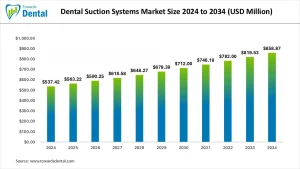
The global dental suction systems market, valued at over USD 537.42 million in 2024, is expected to grow to approximately USD 858.87 million by 2034, reflecting a steady CAGR of 4.8%. This growth is driven by increasing demand in hospitals and dental offices for efficient suction solutions.
Why Are Dental Suction Systems Essential in Clinical Procedures?
Dental suction systems play a crucial role in maintaining the mouth clean and dry during a treatment procedure by effectively removing saliva, blood, aerosols, and debris. The opportunities are growing rapidly due to increased interest in aerosol control, especially post-pandemic, as dental practices worldwide are concerned with air filtration and eliminating cross-contamination.
New opportunities arise as centralized suction systems become more widely used in multi-chair setups, hospitals, and dental chains that need scalable, long-lasting vacuum solutions. Portable suction units are also becoming popular in mobile, children’s, and emergency dental clinics. The market growth is limited by the high costs of installation and maintenance, the energy consumption of large vacuum pumps, and the need for frequent cleaning and sterilization of components. Smaller clinics might struggle to implement premium, high-capacity systems due to financial constraints.
Which Regions Are Leading the Dental Suction Systems Market?
North America and Europe lead the dental suction systems market owing to superior dental infrastructure, robust infection-control policies, and investment in updating clinics. The rapid growth of group dental practices (DSOs) in the U.S. market is an advantage for the market because they prefer centralized suction systems to simplify operations across multiple chairs. The European markets, especially Germany, France, and the UK, emphasize adherence to high hygiene and aerosol-control standards, which promote the adoption of new, high-quality HEPA-filtered, oil-free suction equipment in dental offices.
Meanwhile, the Asia Pacific is emerging as the market with the highest rate of development. Dental tourism is on the rise in countries including China, India, Japan, and South Korea, driven by the number of private clinics and patients’ growing awareness of infection control. Latin America is experiencing average yet gradual growth, with the introduction of more advanced dental facilities in Brazil, Mexico, and Argentina.
How Are Technology and Innovation Transforming Dental Suction Systems?
The dental suction systems market is experiencing rapid technological change as the industry invests heavily in automation, AI-based monitoring, and advanced filtration processes. The integration of AI is improving the performance and maintenance of suction systems through real-time pressure monitoring, predictive maintenance notifications, and vacuum level optimization based on current chair use. Digital dashboards can provide information on suction performance, air quality, and filtration efficiency, helping improve infection control.
Manufacturers are looking to implement eco-friendly, recyclable materials to support global sustainability initiatives.
Dental Suction Systems Market Statical Scope
By Product
- Wet Suction
- Dry Suction

Rohan Patil stands at the forefront of dental market research, leveraging over five years of specialized experience to navigate the intricate landscape of the global dental industry. As Principal Research Analyst at Towards Dental, he spearheads comprehensive research initiatives that encompass a broad spectrum of dental sectors, including orthodontics, periodontics, prosthodontics, and endodontics.
At Towards Dental, Rohan's expertise extends to analyzing emerging trends in dental technologies, regulatory frameworks, and market dynamics. He is instrumental in assessing the adoption of digital dentistry, advancements in dental materials, and the integration of artificial intelligence in diagnostic and treatment modalities.
Rohan's analytical acumen is complemented by his proficiency in translating complex data into actionable insights, enabling him to provide strategic recommendations that inform decision-making across the dental industry. His work not only supports dental professionals and organizations but also contributes to shaping the future trajectory of dental care globally. A trusted advisor and relentless innovator, Rohan continues to push the boundaries of traditional market research, merging scientific rigor with commercial insight to stay ahead in a fast-evolving dental landscape.
- Mobile Dental Unit Market Size to Attain USD 3.76 Billion by 2034 - January 6, 2026
- Dental Cone Beam CT Market Size to Attain USD 1,247.49 Million by 2034 - January 5, 2026
- Dental Resins Market Size to Lead USD 2.7 Billion by 2034 - January 2, 2026
Author
