
The dental etching gel market was valued at USD 452 million in 2024 and is expected to reach nearly USD 940 million by 2034, growing at a 7.6% CAGR. Expansion is driven by rising dental restorations and demand for efficient enamel bonding.
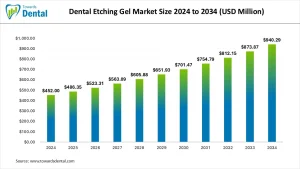
What Factors Are Driving the Rising Demand for Dental Etching Gels in Modern Adhesive Dentistry?
The dental etching gel market includes a professional type of conditioning agents applied on the surface of enamel and dentin before adhesive restorative treatment. These gels form micro-retentive designs enhancing the bonding power of sealants, composites, veneers, orthodontic brackets, inlays, onlays, and an assortment of cosmetic and therapeutic restorations.
The growth in awareness of adhesive dentistry, the increased use of cosmetic dentistry, and the continually increasing need for high accuracy in adhesion, both in chairside and laboratory procedures, are creating good prospects for manufacturers.
The trend in cavity preparation shifted toward more conservative, preventive sealing in the younger cohort and toward sophisticated planning of treatment in implant-supported prosthetics, which also contributed to the increased use of etching gels. However, proper etching requires skill in clinicians, timing, and attention to moisture levels, which can be difficult in complex clinical situations and in low-experience operators.
How Are Regional Capabilities and Clinical Practices Influencing the Global Growth of the Dental Etching Gel Market?
North America is the center of power, with its robust culture of restorative dentistry, a vast pool of trained practitioners, and a rapid adoption of the new bonding protocols in general and specialty practice. The leadership is supported by the presence of large manufacturers, high levels of utilization in cosmetic dentistry, and the prevalence of replacing older methods that use mechanical-retention techniques in the region. Europe remains a primary center because it has some of the highest quality standards, good academic training, and well-established dental material manufacturers with research-based adhesive product lines.
The Asia-Pacific market is the fastest-growing, driven by increased investments in dental education, the rise of private practice models, and a growing number of restorative and cosmetic procedures. Growth in urbanization, the rising percentage of untreated dental caries, and the emergence of dental tourism are the main drivers of demand for reliable adhesion methods.
How Are Technological Advancements and Digital Tools Transforming Etching Gel Chemistry and Clinical Outcomes?
The dental etching gel market is changing due to technological advances, with manufacturers adding better chemistries, finer viscosity control, and improved delivery methods to help achieve predictable bond effects. Increased biocompatibility, reduced irritation, and preparations and gels that can be used in combination with existing adhesive systems are broadening the range of uses of etching gels in restorative dentistry.
Digital platforms interpret enamel and dentin conditions using imaging systems to aid clinicians in defining the optimal etching times, bonding strategies, and combinations of restorative materials. The AI-based chairside software may be used to anticipate the need for moisture control, assess the quality of surface preparations, and guide operators through adhesive instructions to reduce errors.
Dental Etching Gel Market Statical Scope
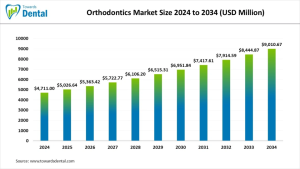
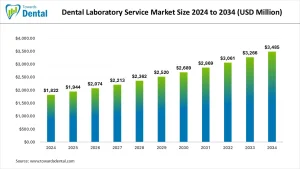
By Type
- Phosphoric Acid Gel
- Hydrochloric Acid Gel
- Self-Etching Gel
- Dual-Cure Gel

Rohan Patil stands at the forefront of dental market research, leveraging over five years of specialized experience to navigate the intricate landscape of the global dental industry. As Principal Research Analyst at Towards Dental, he spearheads comprehensive research initiatives that encompass a broad spectrum of dental sectors, including orthodontics, periodontics, prosthodontics, and endodontics.
At Towards Dental, Rohan's expertise extends to analyzing emerging trends in dental technologies, regulatory frameworks, and market dynamics. He is instrumental in assessing the adoption of digital dentistry, advancements in dental materials, and the integration of artificial intelligence in diagnostic and treatment modalities.
Rohan's analytical acumen is complemented by his proficiency in translating complex data into actionable insights, enabling him to provide strategic recommendations that inform decision-making across the dental industry. His work not only supports dental professionals and organizations but also contributes to shaping the future trajectory of dental care globally. A trusted advisor and relentless innovator, Rohan continues to push the boundaries of traditional market research, merging scientific rigor with commercial insight to stay ahead in a fast-evolving dental landscape.
- Mobile Dental Unit Market Size to Attain USD 3.76 Billion by 2034 - January 6, 2026
- Dental Cone Beam CT Market Size to Attain USD 1,247.49 Million by 2034 - January 5, 2026
- Dental Resins Market Size to Lead USD 2.7 Billion by 2034 - January 2, 2026
Author
